Structured Form with Progress
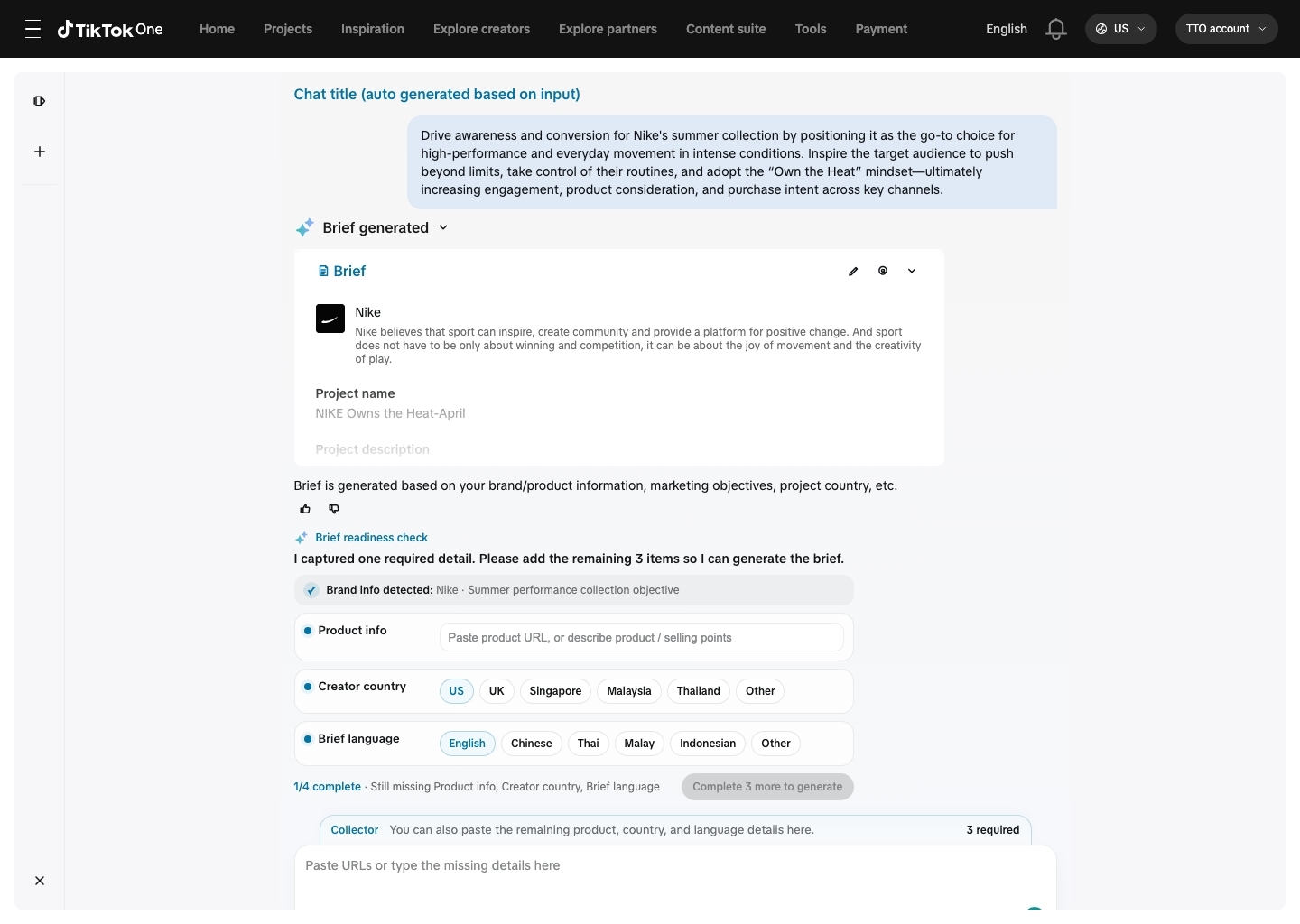
Clear step-by-step guidance with visual progress tracking reduces decision fatigue.
Excessive vertical stacking creates heavy scroll burden and visual overwhelm.
A single designer, an AI coding agent, and a critique loop — turning a vague prompt into four production-grade UI concepts for how an AI Agent should ask follow-up questions before generating a creator brief. Here is the one that won.
What product or objective is the brand actually trying to promote?
The key business context that grounds every creator invitation.
Delivery region is undefined — content localization breaks.
Which language do creators receive the invitation in?
The design question: how should the AI proactively ask for these gaps — without turning a conversation into a form?
Clear step-by-step guidance with visual progress tracking reduces decision fatigue.
Excessive vertical stacking creates heavy scroll burden and visual overwhelm.
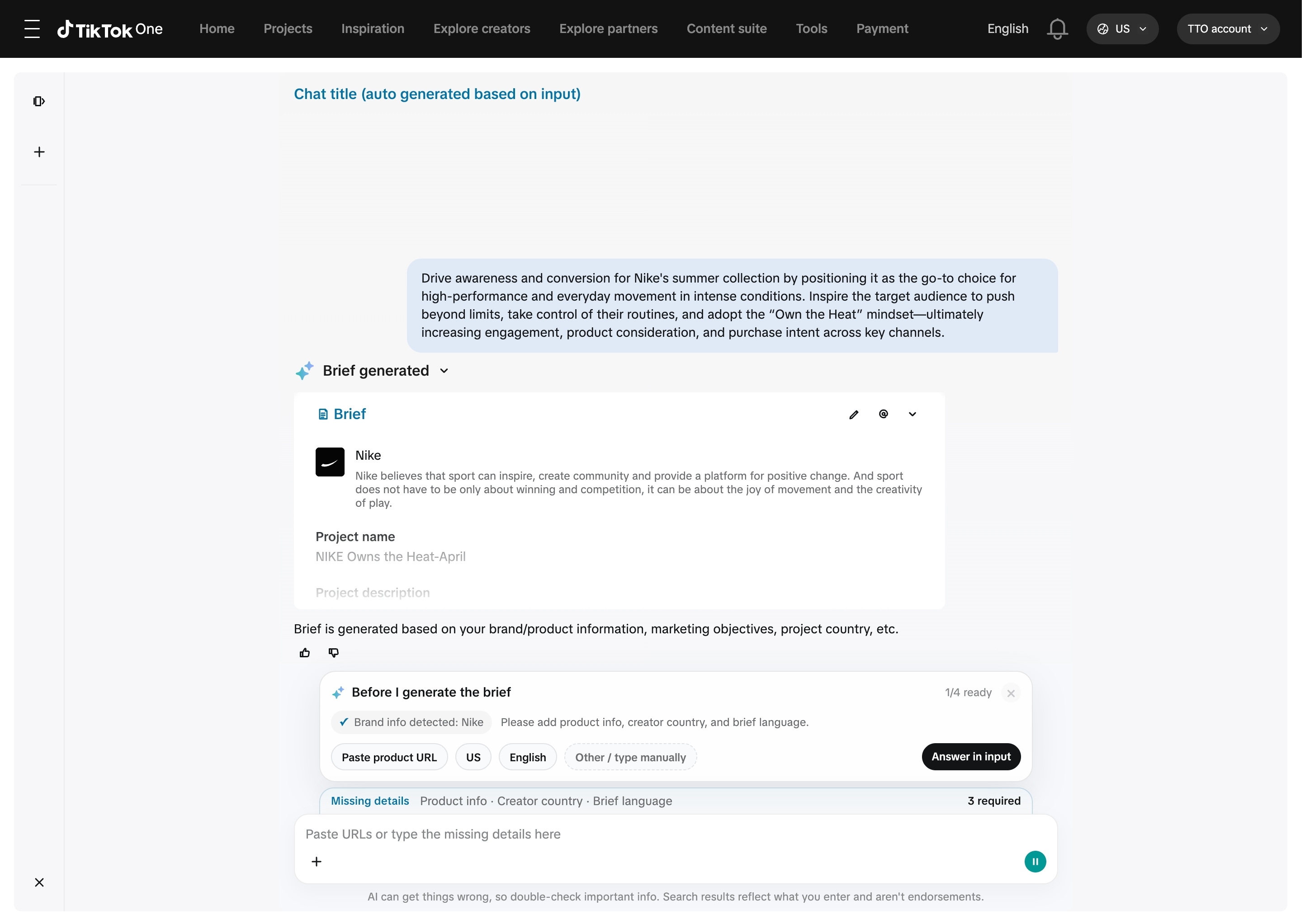
Status cards surface gaps instantly while smart suggestions accelerate input.
Checkbox-to-field workflow adds unnecessary friction versus direct typing.
Chips blend structured input naturally into conversational flow without context switching.
Weak visual hierarchy risks users missing required fields amid chat noise.
Previewing partial output upfront creates immediate gratification and completion motivation.
Incomplete brief prominence may confuse users about editing above vs. filling below.
Inline Chips embody the "conversation as interface" philosophy — brevity without sacrificing efficiency.
Strongest guidance, but feels heavy — excessive scrolling adds friction for a lightweight agent.
Excellent status visualization, but the two-step confirmation works against "minimize friction."
Preview strategy introduces ambiguity — fill the gaps, or edit above?
Combine Design C's inline pattern with Design A's progress visibility — lightweight guidance with progressive disclosure.
Frame the problem space — the missing brief fields.
Pull design assets & tokens via MCP tools.
Spin up multiple UI concepts with an AI coding agent.
Refine variants through prompt-driven cycles.
Compare & score every proposal through Mira.
Claude & Codex for rapid UI prototyping — multiple design variants from text prompts in minutes.
Leverage MCP tools for asset integration and context-aware iteration across design tools.
Refine & compare variants iteratively — enabling fast divergence–convergence cycles.
These aren't mockups. They're interactive, critiqued, and ready to hand to product. The demo is the deliverable.